

What Rexburg Implant Patients Need to Know Before They Start
Most patients asking about dental implants want two things answered before anything else: how much will it cost, and how long is this going to take. At Strobel Family Dental, Dr. Heber Strobel, a graduate of Louisiana State University School of Dentistry and recipient of the 2023 Hanau Best of the Best Excellence in Prosthodontics Award, has placed over 70 dental implants in Rexburg and gives every patient a clear timeline before anything is scheduled. No guessing. No surprises six months in.
The honest answer is that most single implant cases take around six months from the first consultation to the final crown. That timeline can be shorter for patients with healthy bone and no preparatory work needed, and longer for patients who need grafting or other preparation first. Families from Burton, Newdale, and Rigby come to Strobel Family Dental because Dr. Heber walks them through every stage of the restorative dentistry process in plain language before they commit to anything.
What Happens at Each Stage of the Implant Process
The implant process is not one long procedure. It is a series of shorter appointments spread over several months with healing time built in between each stage. Understanding what happens at each step removes most of the uncertainty before you walk in.
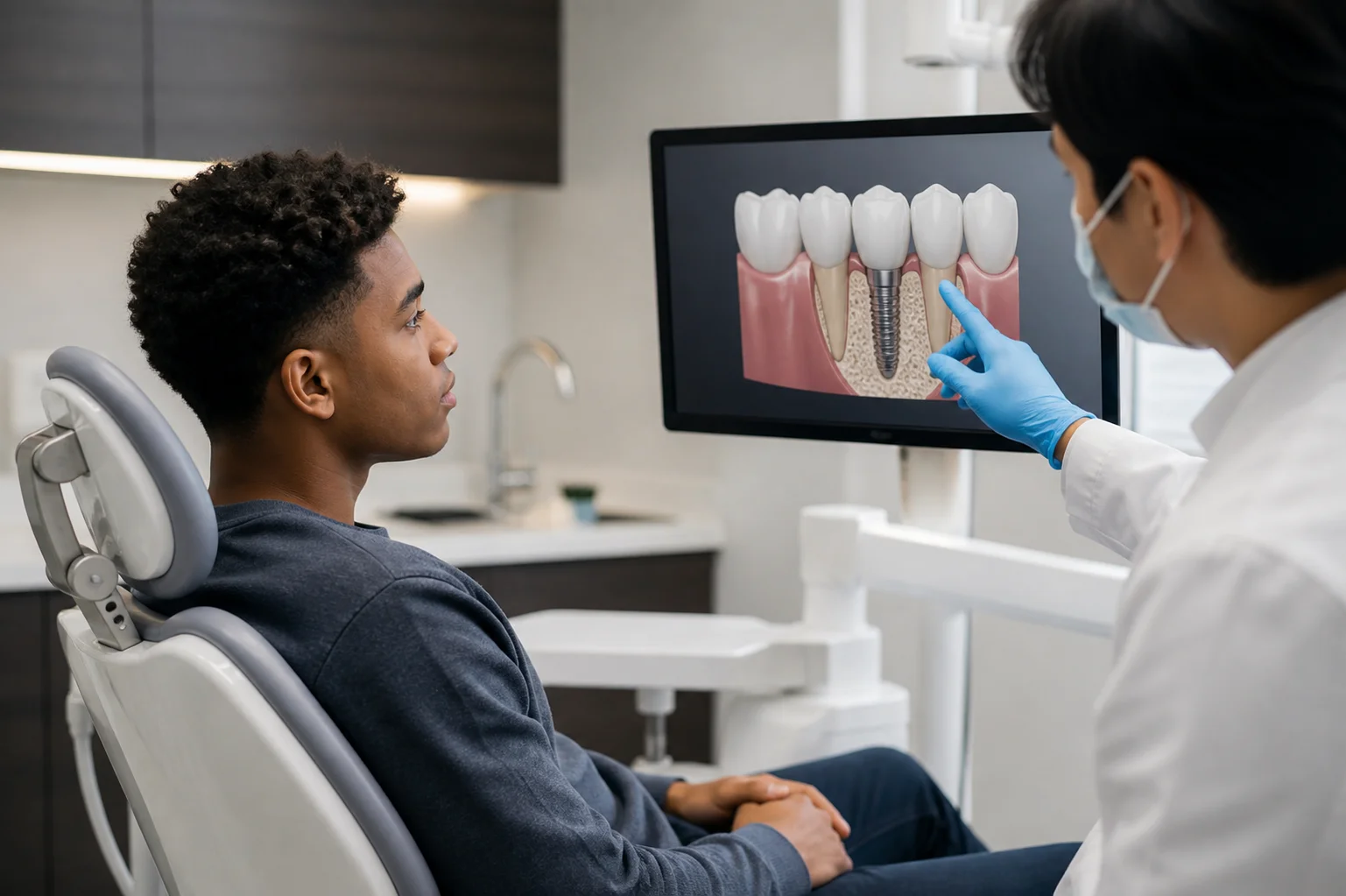
The first appointment is the consultation and planning visit. Dr. Heber reviews bone density using imaging, evaluates gum health, and determines whether you are ready for placement or need preparatory work first. Once the site is ready, the implant post is placed directly into the jawbone with local anesthetic and healing begins immediately.
Why Some Cases Take Longer Than Others
The six-month average covers straightforward single implant cases. Several factors can extend that timeline and Dr. Heber explains exactly which ones apply to your situation at the consultation before any treatment is planned. The most common reasons an implant case runs longer include:
- Bone grafting needed before or at the time of implant placement
- Extended osseointegration time for patients with slower healing or systemic health factors
- Gum disease treatment required before placement can proceed
- Multiple implants being placed in the same case requiring staged appointments
- Previous extractions done elsewhere where bone evaluation is needed first
- Full-arch cases requiring more complex planning and preparation
Fewer than 20% of Dr. Heber’s implant patients need a separate bone graft procedure. In most cases he places the graft at the time of extraction to preserve the site before bone loss begins. Patients comparing implants against alternatives like dentures often find the timeline difference smaller than expected once they account for denture adjustments and replacements over time.