

Why the Crown or Filling Decision Follows Clear Clinical Rules
Most patients want to understand why a crown is being recommended before they say yes. At Strobel Family Dental, Dr. Dirk Strobel has been making this call in Rexburg for over 40 years. Dr. Heber Strobel graduated from Louisiana State University School of Dentistry in New Orleans. He earned the 2023 Hanau Best of the Best Excellence in Prosthodontics Award. Both doctors follow clear clinical guidelines when recommending a crown over a filling. That recommendation is never made without a clinical reason and a clear explanation.
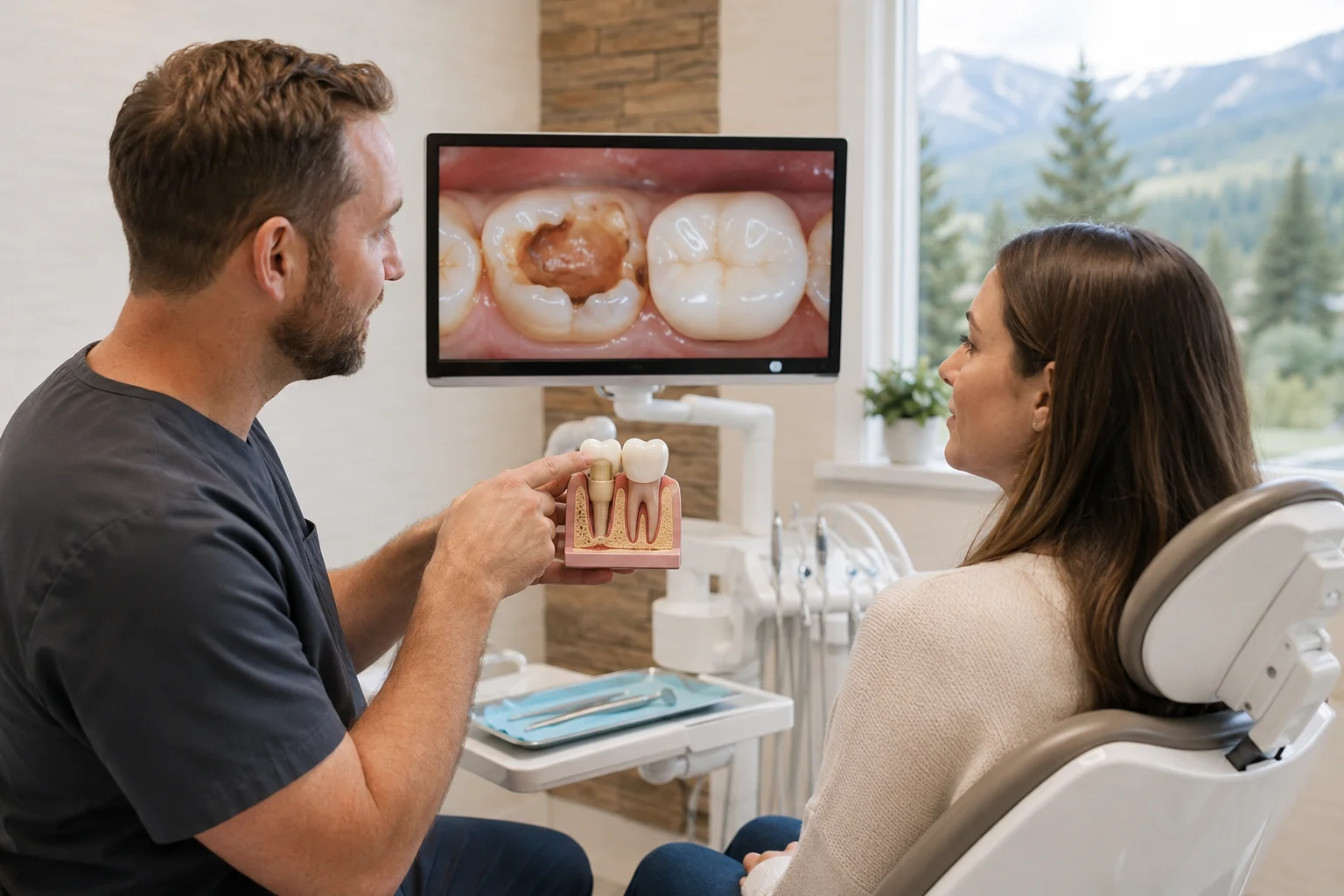
The decision comes down to how much healthy tooth structure remains after decay is removed. A filling works when enough solid tooth is left to support it. When too much is gone, a filling cannot protect what remains. Patients from Burton, Newdale, and Rigby say the reasoning was clear and the decision was easy to accept.
The Clinical Factors That Determine Crown vs Filling
The amount of remaining tooth structure is the most important factor in this decision. When decay removes less than half the tooth, a filling can restore function reliably. When more than half is gone, the remaining walls become too thin to handle chewing forces without cracking. A crown protects the entire tooth from the outside, which is the only reliable option at that point.
Tooth location and root canal history also factor into the decision. Teeth that have had root canals lose significant internal structure and become brittle. A filling alone rarely prevents fracture on a root-canalled tooth under normal chewing forces. Dr. Heber evaluates the full clinical picture before any recommendation is made. A crown on a compromised tooth is almost always the more protective long-term choice.
What Happens If You Choose the Wrong Treatment
When a tooth that needs a crown gets a filling instead, the outcome is predictable. The thin walls flex under chewing forces and eventually crack. A cracked tooth is sometimes beyond saving once the fracture extends below the gum line. Treating it correctly the first time is almost always less expensive than fixing what went wrong later.
Some patients worry that a crown recommendation is upselling. That concern is understandable given the cost difference. Dr. Dirk and Dr. Heber explain the clinical reason behind every recommendation before any work is discussed. If a filling will hold up, that is what gets recommended. A crown is only suggested when the tooth genuinely cannot be protected any other way. Patients who want to review all their restorative dentistry options before deciding can do that at their consultation.