Phone:
208-356-4400
Address:
59 Professional Plaza
Rexburg, ID 83440
A quick, painless exam that can detect serious problems early.


Phone:
208-356-4400
Address:
59 Professional Plaza
Rexburg, ID 83440
Monday 8AM – 5PM
Tuesday 8AM – 6PM
Wednesday 8AM – 5PM
Thursday 8AM – 6PM
Friday 8AM – 5PM
Saturday 7AM – 1PM
Sunday: Closed
Dr. Heber Strobel
ID License: D-5516
Dr. Dirk Strobel
License: D-1877

A two-minute oral cancer screening during your dental visit can literally save your life. Most early oral cancers do not cause pain, which means they are easy to ignore until they become serious. Oral Cancer Screening in Rexburg helps identify suspicious changes when treatment is simpler and survival rates are significantly higher.
At Strobel Family Dental, Dr. Dirk Strobel and Dr. Heber Strobel include thorough oral cancer screening as part of routine preventive care. Dr. Dirk Strobel has served Rexburg families for more than 40 years and was recognized for ethics and integrity during his training at Creighton University. Dr. Heber Strobel brings modern diagnostic training from LSU, and together they follow evidence-based guidance from the American Academy of Oral Medicine and other expert organizations to ensure screening is consistent and comprehensive.
An oral cancer screening is a visual and hands-on examination of the mouth, tongue, lips, throat, and surrounding tissues to look for early warning signs of cancer. During this exam, your dentist looks for red or white patches, sores that do not heal, lumps, thickened areas, or unusual changes in texture. The goal is not to diagnose cancer immediately, but to identify anything suspicious that needs further evaluation.
Major expert groups recommend including this type of screening in standard dental visits. Early detection dramatically improves outcomes because cancers caught in early stages are far more treatable than those discovered later. For many adults, routine dental visits are the only consistent opportunity for this type of screening.
Every adult should receive regular oral cancer screenings, typically as part of routine dental check-ups. Many preventive-focused dental practices perform this screening at each recall visit, often every six months. High-risk patients may benefit from even more frequent evaluation.
Patients at higher risk include current or former tobacco users, heavy alcohol consumers, individuals with HPV history, and those with previous oral lesions. Rexburg adults, seniors, and even some older teens preparing for missions should discuss risk factors openly so screening frequency can be tailored appropriately. Screening is not only for smokers, and no one is “too young” to benefit from awareness.
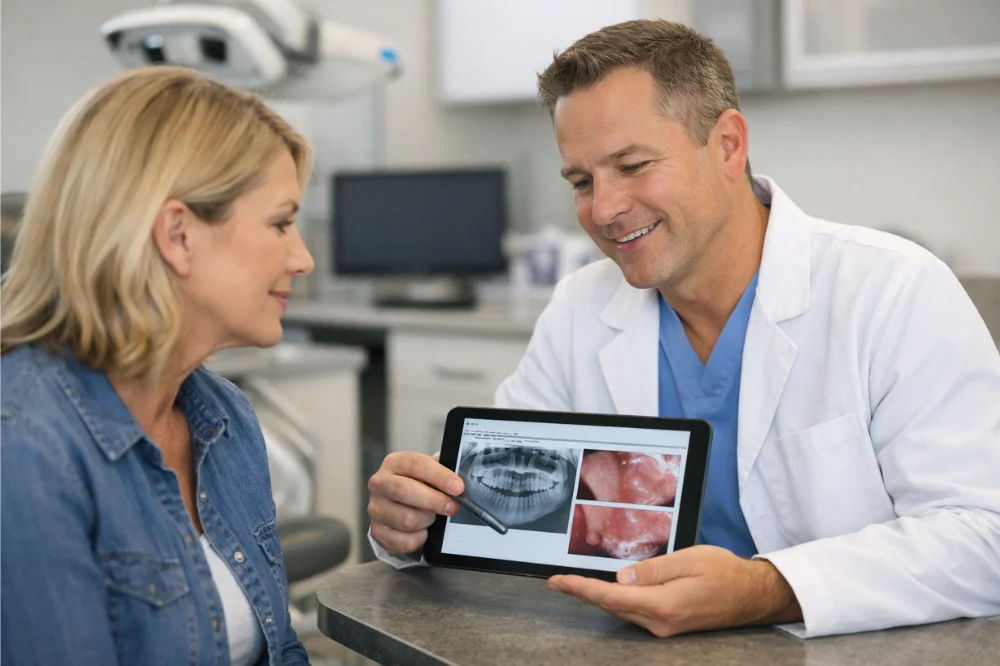
Most screenings take less than five minutes and are completely painless. The process begins with a brief health discussion about any persistent sores, swallowing issues, voice changes, or lifestyle risk factors. The dentist then visually inspects your lips, cheeks, gums, tongue, floor of the mouth, roof of the mouth, and throat.
The exam also includes gentle palpation of the neck and under the jaw to check lymph nodes and soft tissues for lumps or abnormalities. Dentures are removed when necessary so tissues underneath can be evaluated. You may only feel light pressure during parts of the exam, and no preparation is required beforehand.
Understanding risk factors helps patients stay alert between visits. Tobacco use in any form, heavy alcohol consumption, HPV infection, and excessive sun exposure to the lips increase risk. Family history and prior oral lesions may also elevate concern.
Warning signs include sores that do not heal within two weeks, red or white patches, lumps, persistent numbness, difficulty chewing or swallowing, and unexplained voice changes. These symptoms do not always indicate cancer, but they should always be evaluated promptly.
Some patients assume that if nothing hurts, nothing is wrong. The comparison below shows why waiting can change outcomes significantly.
| If Screening Is Delayed | If Screening Is Routine |
| Changes go unnoticed | Suspicious areas found early |
| Diagnosis at later stage | Diagnosis at earlier stage |
| More complex treatment | Higher survival rates |
A suspicious finding does not automatically mean cancer. Many abnormal areas are benign or related to irritation. However, identifying concerns early allows for prompt follow-up and peace of mind.
You want reassurance without unnecessary procedures, and that is exactly what Oral Cancer Screening in Rexburg, ID provides. At Strobel Family Dental, Dr. Dirk Strobel and Dr. Heber Strobel integrate thorough visual and tactile screening into routine check-ups for adults, students, and seniors in Rexburg and surrounding communities. Early detection offers the best chance at successful treatment, and screening takes only minutes during your visit.
Get Started in 3 Easy Steps….
During screening, your dentist looks for red or white patches, sores that do not heal, unusual lumps, thickened tissue, and changes in texture inside the mouth and throat. The exam also includes checking lymph nodes in the neck and under the jaw for enlargement. The purpose is to detect suspicious changes early so they can be evaluated before becoming serious.
No, oral cancer screening is painless and non-invasive. You may feel gentle pressure as tissues are examined, but there is no cutting, scraping, or discomfort involved. The process typically takes only a few minutes during your routine visit.
Most adults benefit from screening at least once per year, often during routine dental check-ups. High-risk individuals may need more frequent evaluation depending on tobacco use, alcohol consumption, or other factors. Your dentist tailors screening frequency to your personal risk profile.
If an area appears suspicious, it may be documented and rechecked after a short period or referred for biopsy if necessary. Many abnormal findings are benign and resolve on their own, but persistent lesions require further evaluation. Early follow-up provides clarity and improves outcomes if treatment is needed.
It is helpful to be aware of changes in your mouth between visits, and you should look for sores that do not heal within two weeks, red or white patches, unusual lumps, or persistent pain or numbness. However, self-checks cannot replace a professional screening because many early changes are subtle and difficult to recognize without training and proper lighting. Regular dental exams allow your dentist to examine areas that are hard to see on your own and compare tissues over time, which greatly improves early detection.
The information on this page is provided to help you understand general dental care and the preventive services we offer. It’s not a substitute for professional diagnosis or individualized treatment. Every patient’s needs are different, and your dentist will evaluate your oral health before recommending any specific care or procedure. (For personalized guidance, please schedule an appointment with our licensed dental professional.)