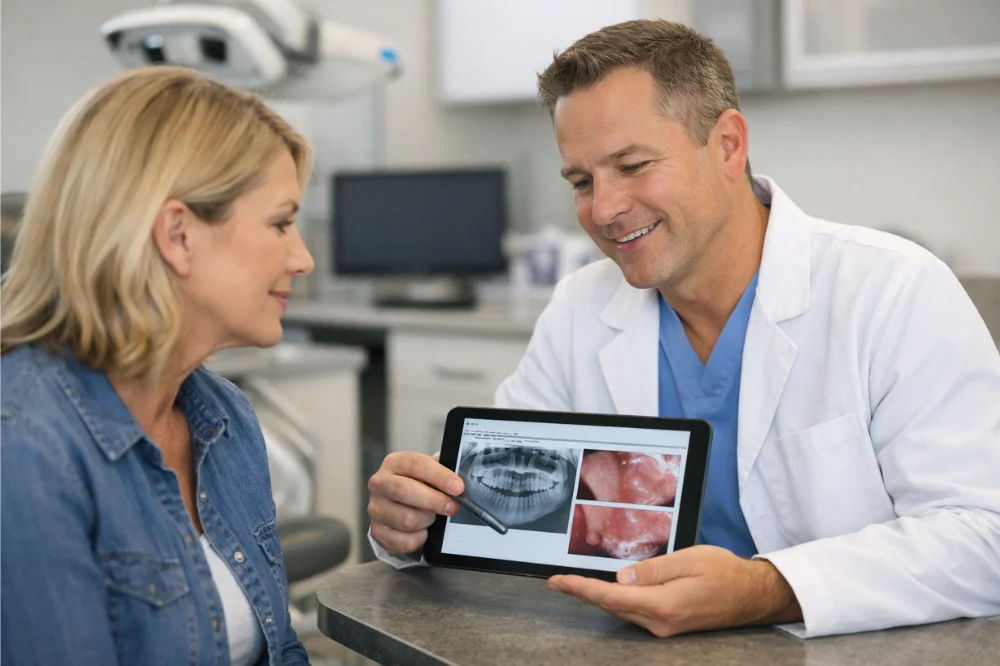


Catch What You Cannot Feel Yet
A two-minute oral cancer screening during your general dental visit can literally save your life. Most early oral cancers do not cause pain, which means they are easy to ignore until they become serious. Oral Cancer Screening in Rexburg helps identify suspicious changes when treatment is simpler and survival rates are significantly higher.
At Strobel Family Dental, Dr. Dirk Strobel and Dr. Heber Strobel include thorough oral cancer screening as part of routine preventive care. Dr. Dirk Strobel has served Rexburg families for over 40 years and was recognized for ethics and integrity during his training at Creighton University School of Dentistry. Dr. Heber Strobel brings modern diagnostic training from Louisiana State University School of Dentistry, and together they follow evidence-based guidance from the American Academy of Oral Medicine and other expert organizations so screening stays consistent and thorough.
What Is an Oral Cancer Screening
An oral cancer screening is a visual and hands-on examination of the mouth, tongue, lips, throat, and surrounding tissues to look for early warning signs of cancer. During this exam, your dentist looks for red or white patches, sores that do not heal, lumps, thickened areas, or unusual changes in texture. The goal is not to diagnose cancer immediately, but to identify anything suspicious that needs further evaluation.
Major expert groups recommend including this type of screening in standard dental visits. Early detection dramatically improves outcomes because cancers caught in early stages are far more treatable than those discovered later. For many adults, routine dental visits are the only consistent opportunity for this type of screening.
Who Needs Oral Cancer Screening and How Often
Every adult should receive regular oral cancer screenings, typically as part of a routine dental check-up. Many preventive-focused dental practices perform this screening at each recall visit, often every six months. High-risk patients may benefit from even more frequent evaluation.
Patients at higher risk include current or former tobacco users, heavy alcohol consumers, individuals with HPV history, and those with previous oral lesions. Rexburg adults, seniors, and even some older teens preparing for missions should discuss risk factors openly so screening frequency can be tailored appropriately. Screening is not only for smokers, and no one is “too young” to benefit from awareness.
What Happens During an Oral Cancer Screening
Most screenings take less than five minutes and are completely painless. The process begins with a brief health discussion about any persistent sores, swallowing issues, voice changes, or lifestyle risk factors. The dentist then visually inspects your lips, cheeks, gums, tongue, floor of the mouth, roof of the mouth, and throat.
The exam also includes gentle palpation of the neck and under the jaw to check lymph nodes and soft tissues for lumps or abnormalities. Dentures are removed when necessary so tissues underneath can be evaluated. You may only feel light pressure during parts of the exam, and no preparation is required beforehand.