Do You Need a Bone Graft for Dental Implants in Rexburg, ID

Bone grafting for dental implants in Rexburg, ID at Strobel Family Dental. Call 208-356-4400 to find out whether you need one before anything gets scheduled.

Dentist in rexburg ID, Strobel Family dental
Spark clear aligners SFD
rexburg Dentist
ADA, Dentist in rexburg ID,
NFIB Dentist in rexburg ID, Strobel Family dental

What Implant Patients in Rexburg Need to Know About Bone Grafting

Being told you need a bone graft sounds like the plan just got worse. It rarely does. Most people hear extra surgery, extra months, and extra cost inside that one phrase. At Strobel Family Dental, a father and son answer that honestly. Dr. Heber Strobel graduated from Louisiana State University School of Dentistry. He received the 2023 Hanau Best of the Best Excellence in Prosthodontics Award. He has placed over 70 dental implants in Rexburg. Dr. Dirk Strobel graduated from Creighton University School of Dentistry in 1985. He has practiced here for over 40 years.

Here is the part the phrase leaves out. Fewer than 20 percent of our implant patients need a graft at all. The word scares far more people than the procedure ever reaches. When one is needed, it usually happens during an extraction you already scheduled. That means one recovery instead of two, and a shorter path rather than longer. That honest evaluation starts every restorative dentistry conversation at Strobel Family Dental. Families from Burton, Newdale, and Rigby come here for a reason. They want a dentist who tells them what they do not need. That answer costs us appointments sometimes. We give it anyway.

Why Most Implant Patients Never Need a Graft

Bone behaves differently than most people expect after a tooth is gone. Chewing pressure signals your jaw to keep the bone around a tooth root. Once the tooth leaves, that signal stops and the ridge slowly narrows. This is ordinary biology, not a consequence of anything you did wrong. Every mouth loses some ridge width after a tooth comes out. How much depends almost entirely on how long it has been.

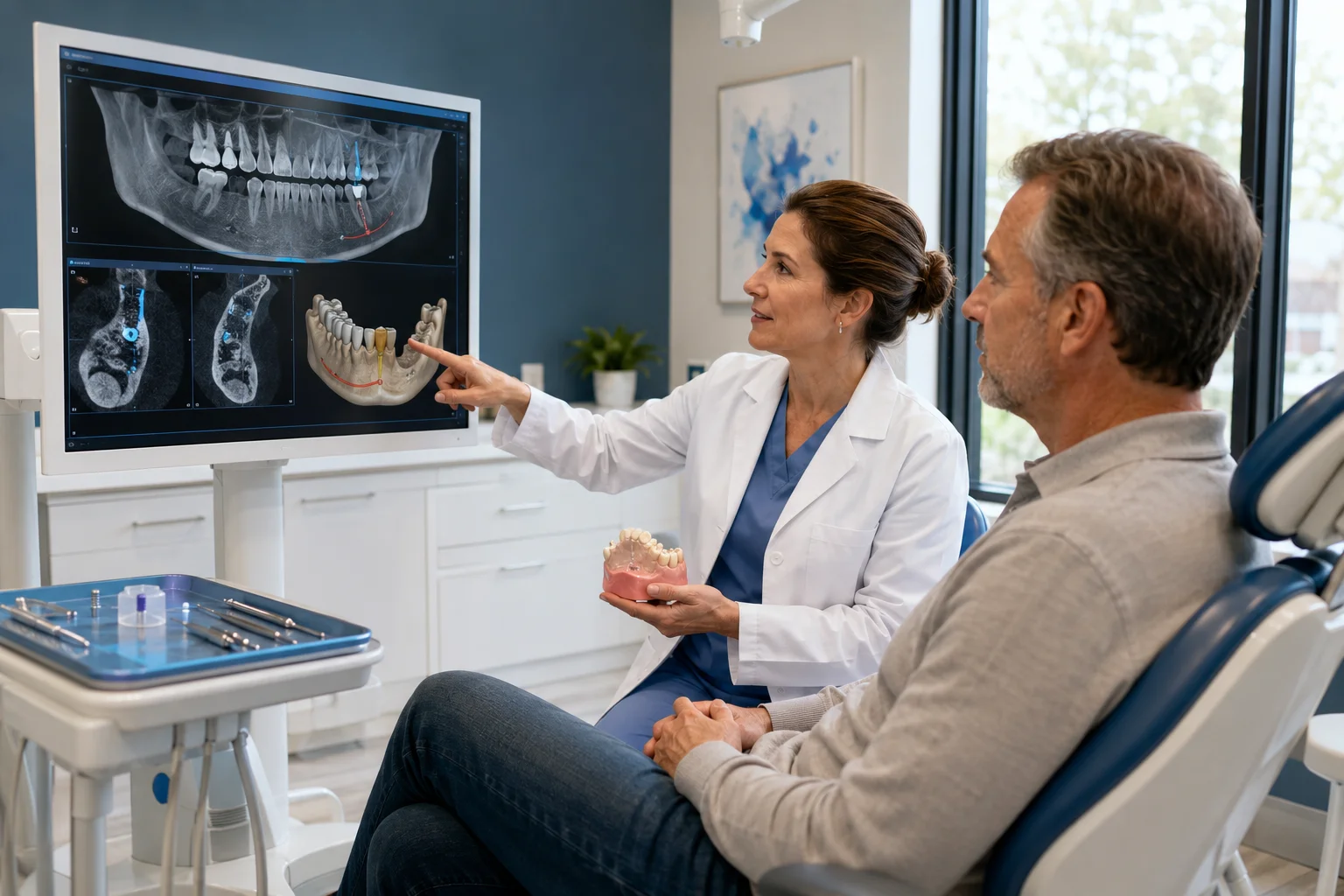
Time is the variable that decides this question. A tooth lost last month rarely creates a problem worth grafting. A tooth lost eleven years ago is a very different conversation. Infection and gum disease speed the process up considerably. A 3D scan settles which one you are in a single appointment. You will know before you commit to anything at all. We scan first and plan second, never the other way around. Guessing about bone is how implant cases go sideways later.

Why Grafting Happens During the Extraction

The socket is already open and the site is already numb. That makes the extraction the most efficient moment to place a graft. Doing it then folds the graft into a recovery you were having anyway. Instead of two surgeries and two healing windows, you get one of each. Dr. Heber does this in most cases rather than as an exception. The soreness overlaps with healing you were already going to do.

The common approach across this market schedules grafting months ahead of the implant. That turns one problem into two appointments and adds real time to your calendar. Fewer visits also means fewer chances for something to go sideways between them. For families driving in from outside Rexburg, that difference is not small. There is an honest limit worth saying out loud here. Grafting at extraction only works when we know the tooth is coming out. Someone arriving in pain with an emergency may not get that option.
Phone:
208-356-4400

Address:
59 Professional Plaza
Rexburg, ID 83440

Email:
strobelfamilydental@gmail.com

Monday 8AM – 5PM
Tuesday 8AM – 6PM
Wednesday 8AM – 5PM
Thursday 8AM – 6PM
Friday 8AM – 5PM
Saturday 7AM – 1PM
Sunday: Closed

Dr. Heber Strobel
ID License: D-5516

Dr. Dirk Strobel
License: D-1877

Dental Implants in Rexburg ID, Dentists in Rexburg ID, Dr. Dirk Strobel

What Makes a Bone Graft More Likely for You

Several things raise the odds that grafting enters your plan, and almost all come down to time. A tooth missing for several years matters more than one missing for months. Infection that damaged the surrounding bone counts, and so does gum disease left untreated. An upper back tooth sitting close to the sinus raises the odds. A narrow ridge that never carried much width counts too. So does trauma that took bone along with the tooth.

Nobody here will lecture you about a tooth you lost in 2014. People wait for reasons that make sense to them, and cost is usually one. The wound most patients carry is being judged somewhere else. We are not interested in adding to it. Dr. Heber walks through your scan and tells you where you stand. Around half the people who come in for an implant consult are not candidates yet. Patients from Jolley, Rigby, and across the Upper Snake River Valley tell us something. Clarity is what they remember most.

Grafting at Extraction vs. Grafting Later

Both paths end with an implant, and both are legitimate dentistry. What separates them is how many times you sit in a chair. Seeing them side by side makes the difference obvious.

Graft during extraction Graft as a separate procedure
Surgeries One Two
Recovery periods One, overlapping Two, separate
Time added Little to none Several months
Trips away from work One Two
What you feel Soreness you were having anyway Soreness twice
Requires Knowing the tooth is coming out Nothing, works after the fact

The right column is not bad dentistry, and sometimes it is the only option. An emergency extraction can force that longer sequence. So can a site that healed over years ago. The point is that the left column exists, and most patients qualify for it. Asking early is what keeps that door open for you. A tooth extraction deserves a real conversation rather than a reflex.

What Recovery Actually Involves

Recovery from one placed at extraction resembles recovery from the extraction itself. You heal one site rather than opening a fresh wound somewhere new. Expect soreness peaking in the first two days, then easing steadily. Swelling settles by day three or four for most patients. Soft foods carry you through a short stretch while the site closes. Most people manage with drugstore pain medicine rather than anything stronger.

A short follow-up confirms the graft is integrating properly, and nobody bills you for it. Grafting is the single most common reason an implant case runs long. Catching a slow site early keeps your timeline honest with you. We would rather find it at a checkup than on your implant day. That visit takes ten minutes and protects the months behind it.

You Deserve to Know What You Do Not Need

Dr. Heber Strobel, a graduate of Louisiana State University School of Dentistry and recipient of the 2023 Hanau Best of the Best Excellence in Prosthodontics Award, and Dr. Dirk Strobel, a Creighton University School of Dentistry graduate who has cared for Rexburg families for over 40 years, give patients from Newdale, Rigby, and across the Upper Snake River Valley an honest answer about whether a bone graft is needed at Strobel Family Dental before a single appointment is scheduled. Call 208-356-4400 or book online at strobelfamilydental.com.

Request Appointment

Getting Started With Your Dental Care Is Simple

Get Started in 3 Easy Steps….

Schedule Consultation

Give us a call to schedule a time to come in.

Meet Our Team

Sit down with our dentist for a thorough, unhurried evaluation

Personalized Plan

We create a treatment plan based on your health and goals.

Frequently Asked Questions

Does a bone graft hurt more than the implant itself?

Not when it goes in during an extraction you were already having. The site is numbed the same way, and the soreness overlaps with healing already underway. The American Dental Association notes your dentist evaluates whether your jawbone can support an implant. The Cleveland Clinic describes implant treatment as staged work with anesthesia and healing built in. Most patients describe the graft as one recovery rather than a second event.

Where does bone graft material come from?

It rarely comes from your own body anymore, which surprises nearly everyone. Research published by the National Institutes of Health explains that bone taken from the patient is the traditional standard. That approach carries real drawbacks, including a second surgical site and limited supply. Most modern grafts use processed donor bone, animal-derived mineral, or synthetic material instead. The American Dental Association describes implant treatment as surgery with healing time between phases.

How long before the implant can go in after a graft?

That depends on whether the graft went in at extraction or on its own. Our average from consult to finished implant runs about six months. A graft placed during extraction usually heals inside that same window. The Cleveland Clinic describes implant treatment as staged work with distinct healing periods built in. Research from the National Institutes of Health found most patients recover from placement itself within about four days.

What happens if I skip the bone graft?

Sometimes nothing, because fewer than 20 percent of our patients need one. When bone is genuinely insufficient, an implant has less structure to fuse to. The American Dental Association describes implants as posts placed in the jaw where they anchor replacement teeth. That job depends on having enough bone to anchor into. The Cleveland Clinic explains that implants rely on fusing directly to the jawbone for stability.

The information on this page is provided to help you understand general dental care and the preventive services we offer. It’s not a substitute for professional diagnosis or individualized treatment. Every patient’s needs are different, and your dentist will evaluate your oral health before recommending any specific care or procedure. (For personalized guidance, please schedule an appointment with our licensed dental professional.)

Let’s Help You Feel Better